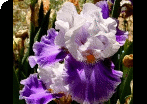
Growing Iris In-Ground or in Raised Beds around the Tucson Area
Selecting a site - good drainage is crucial, and raised beds are an excellent option if a flower bed is not feasible. Look for a spot with full sun in the cool seasons and morning to early afternoon sun in the hot seasons. Be aware of reflected heat from block walls. Remember soil conditions vary greatly throughout the Tucson valley, so plan accordingly.
Preparing the soil - Try to prepare the bed a month in advance and beware of compost containing fresh manure. Break up the native soil to a depth of 16”-24”. Remove rocks and all roots. Add compost, pumice and peat moss to create a 50-50 mixture. Using a high-quality compost, such as mushroom compost is important. If creating a raised bed, break up the native soil under the raised bed so the total worked soil will be 24” deep. Purchase a special soil mix (bulk) for raised beds and mix with the native soil. Again, drainage is important. A granular type of 10-10-10 fertilizer may be scattered throughout the bed.
Plant rhizomes in September when temperatures are below 100 degrees. The night before you plant, soak your rhizomes overnight in water which reaches to the bottom of the rhizome. This will ‘kick start’ growth. Place 1 T. Triple Super Phosphate about 8” down in the holes when planting rhizomes, so it will be there for the roots to reach. All iris, except Japanese iris, will benefit from 1 T. of bone meal in the planting hole. Plant the rhizome with its top at the soil line, or just slightly below. Iris will not bloom if planted too deep. Press the soil firmly and water the newly planted iris once every 3-4 days for 14 days, then every 5-6 days for 14 days, then once a week. Tall Bearded iris should be planted 18” apart, Standard Dwarf Bearded iris about 12” apart.
Iris are heavy feeders. From late September through May, consider applying a liquid fish emulsion monthly. Apply Miracle Gro Bloom Booster 10-52-10 (or any other water-soluble fertilizer with a middle number of 50 or higher, and a Nitrogen number of 10 or lower) every two to three weeks starting in January. Withhold fertilizer when flower stalks emerge. Final fertilizing is done in May. Follow the package instructions.
Water if the top 2” of soil is dry. Use your finger or a moisture meter to determine watering needs. If the temperature is above 95 degrees, water the soil in the evening or rot may occur. Driplines are best for larger beds. Iris prefer well drained, slightly dry soil.
In June, covering iris with a 30% or 40% shade cloth may be necessary with the onset of summer temperatures over 105 degrees. Be cautious with the shade cloth as too much shade will affect the bloom in the spring. However, shade from trees should be sufficient for in ground and raised bed plantings.
Watch iris leaves for aphids and mealy bugs and treat them accordingly. Follow package instructions.
Common iris mistakes include planting in poorly draining soil/clay/caliche without proper soil amendments, over watering, planting too deep, not maintaining a fertilizing schedule, failure to keep plants tidy, and planting too close to other plants.
Please visit our website at www.tucsoniris.org for information about our meetings and events. Or, join our club and enjoy informative speakers and up to date iris information.